Cases: Reliable Tools Above All Else
When I pick up a camera body, the first thing that matters to me is how it feels. The feel.
It has to appeal to me aesthetically; it has to feel solid and well-made. Not to stroke my ego (well, maybe just a little), but because it’s my work tool. I spend hours with it. I need to be able to trust it.
I’ve actually switched camera bodies out of frustration before, yes.
Before Sony, I worked at Fujifilm, using APS-C sensors. I loved a lot of things about Fuji, but the autofocus—especially in low light—was clearly lacking. At one point, it was becoming a limitation in my work.
I remain convinced that equipment isn’t what makes for a good image. Knowing how to compose a shot, tell a story, and master storytelling comes long before the camera body itself. Today, there are countless cameras capable of producing beautiful images.
But it’s still just a tool of the trade. It needs to be reliable, built to last, and above all, give me that assurance and confidence so I don’t have to think about the equipment when I’m shooting.
And actually, when I'm working, I don't really think about the technical side of things anymore. I make sure everything is set up and that my settings are right, and then I move on to something else.
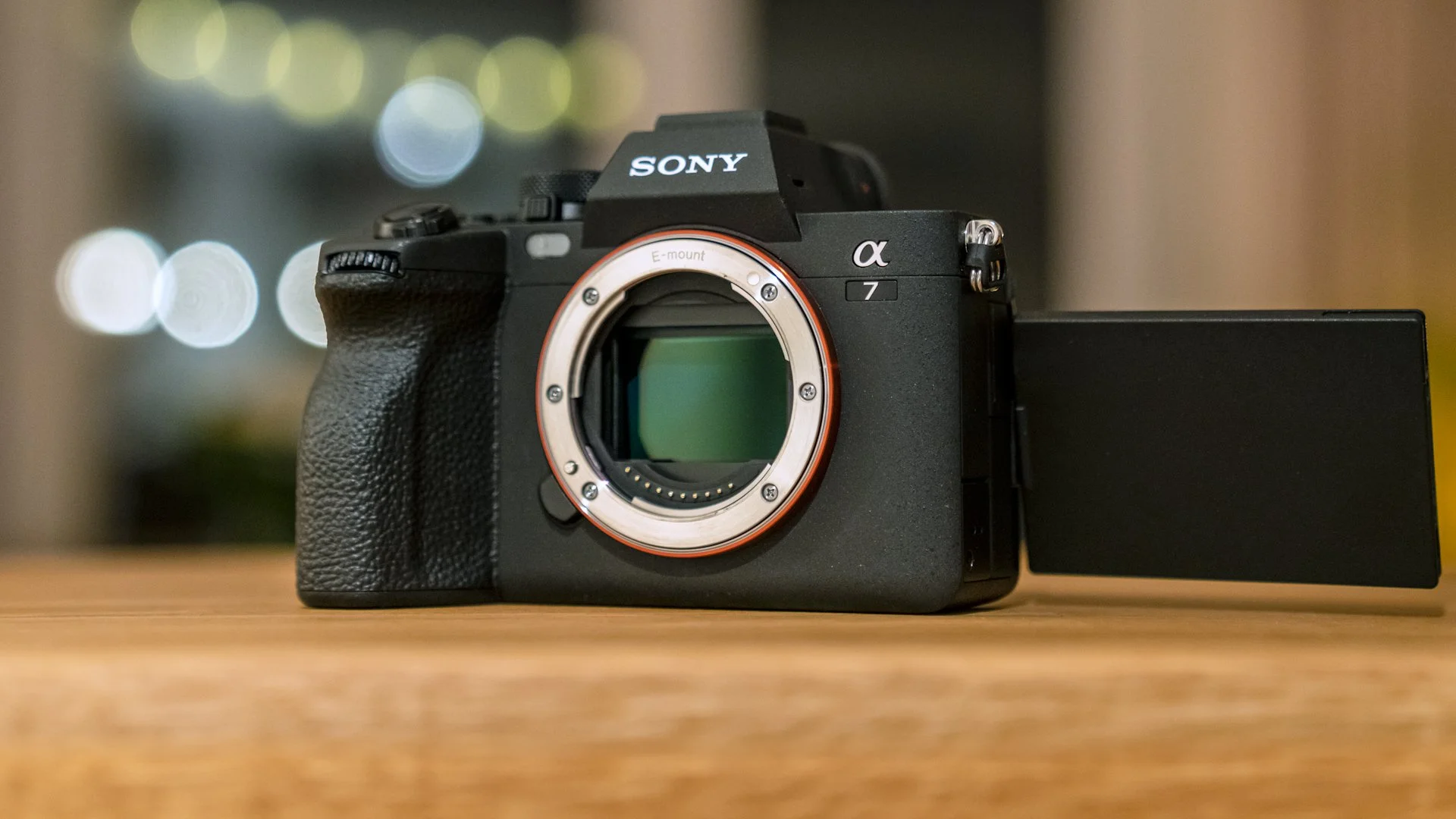
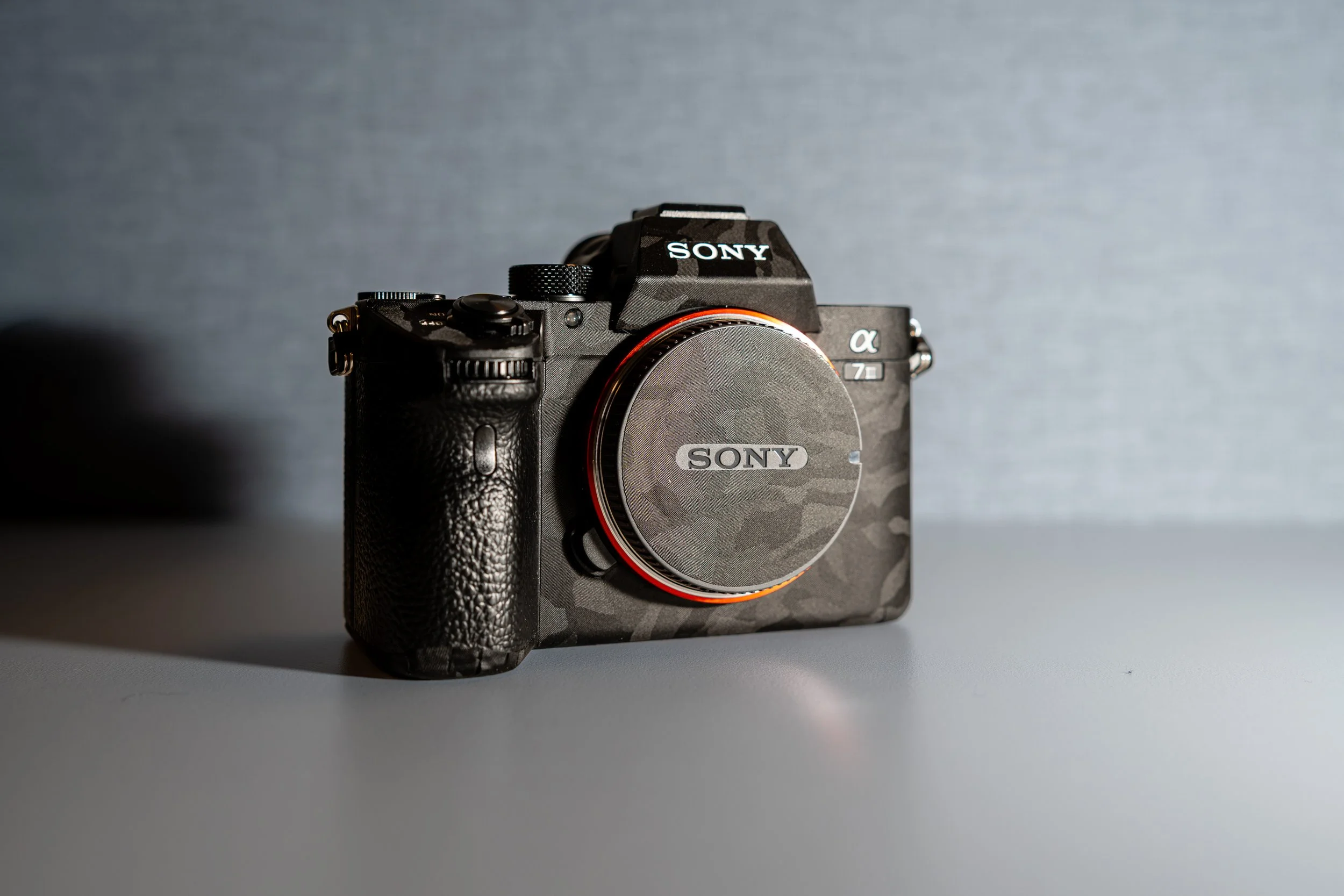
Main camera body: Sony A7 IV
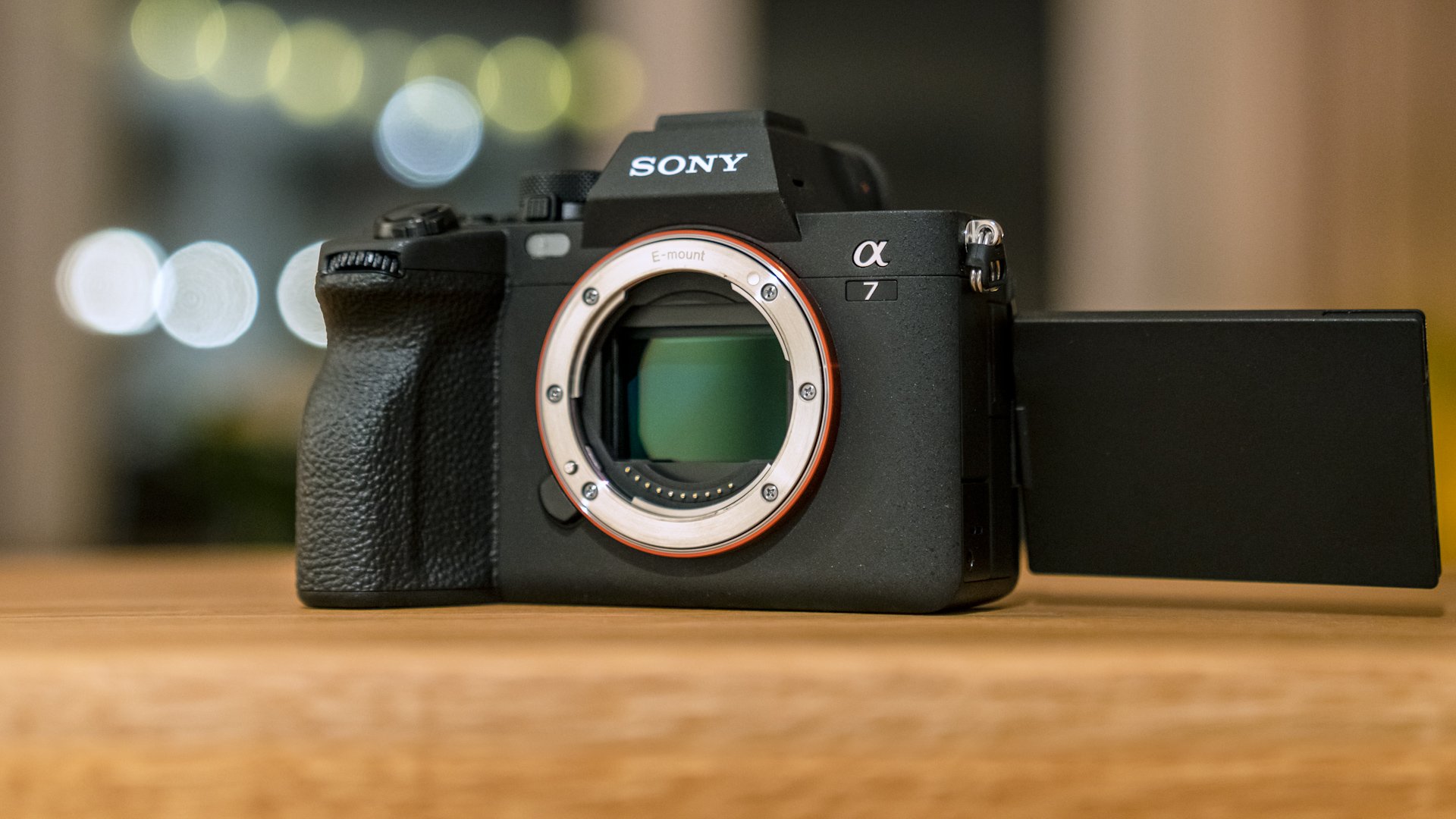
My main camera is a Sony A7 IV.
Yes, I know, the A7 V is out now. Yes, I’m definitely eyeing it. Yes, it’s not perfect either. But for now, we’ll just stick with the A7 IV.
This is the camera I reach for first, without even thinking. Simply because it’s the best one I have right now. It checks so many boxes for my needs: excellent image quality, a color rendering I love, and a design that really suits me.
I don't like carrying around unnecessary weight, and I find that the A7 IV is still quite compact while delivering excellent performance. It's sturdy, well-built, and you definitely feel like you're holding a professional-grade camera. Which, in fact, it is.
What I particularly appreciate is the overall ergonomics: the dials, the screen, and how it feels in the hand. But also the ISO range, its performance in low light, and especially the autofocus, which remains reliable in situations where, with Fujifilm, it used to be much more complicated.
I feel most comfortable using the A7 IV at events—especially weddings—and when shooting video. It’s really in those situations that it gives me the most comfort, confidence, and freedom, especially compared to the cameras I’ve used in the past.
Obviously, there are features I hardly ever use.
Auto mode, for example—I’ve never used it and probably never will. But that’s true no matter what camera I use.
There are also certain bracketing modes I don’t use, simply because I have no need for them.
I don't use APS-C mode—or Super 35—which lets you crop directly within the image, either. I don't really see the point, since I prefer to shoot my image as-is and crop it in post-production if necessary.
There is, however, one thing that still annoys me a little—again, related to cropping: cropped 4K 60p. Honestly, it’s not a major limitation; it’s not a deal-breaker. Super 35 mode is still very usable, and in my actual workflow, it’s never prevented me from working.
(Hey there, A7 V, with your uncropped 4K 60. See you soon, I promise.)
Do I use it more for photos or videos?
I’m a photographer first and a videographer second, but honestly, I think it’s excellent in both areas. The image quality, autofocus, ISO range, color reproduction… everything works together seamlessly.
Today, it really meets all my needs. I realize it’s not the best camera on the market. The market is changing fast—very fast, in fact. It’s not a top-of-the-line premium model, but it lets me do everything I need to do without any frustration.
And that’s exactly what I expect from my main camera.
Secondary camera: Sony A7 III
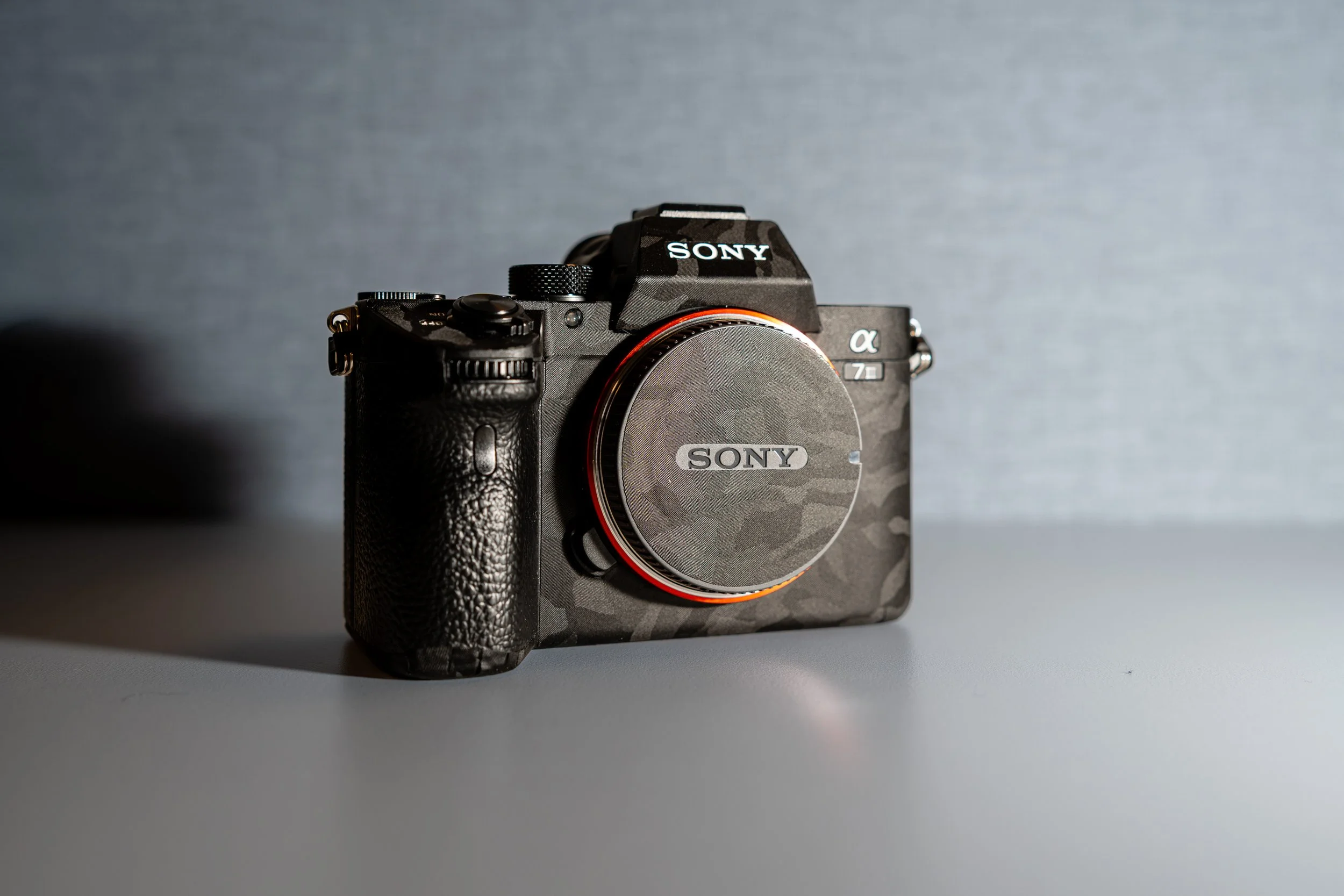
Sony A7III
And to prove that equipment isn't everything—and that you can also produce beautiful images with "less-than-ideal" gear—I'm going to tell you about the Sony A7 III.
When I say "less-than-ideal," the reality is, of course, more nuanced.
The Sony A7 III is the previous generation, and I still have it with me. I kept it, and I still have it today—it’s my backup camera. Even in 2025, it’s still truly exceptional.
Obviously, it’s starting to show its age a bit. It lacks some of the latest technologies, and certain features have evolved in subsequent generations. But despite that, it still performs very well.
Image quality is still excellent, even with its 24 megapixels, compared to the A7 IV’s 33 megapixels. The ISO range is remarkable, and for this generation, the autofocus is still very good, even if it’s starting to show its limitations in very low light.
I mainly use it for my real estate photography.
It lets me do absolutely everything the A7 IV can do in terms of photography, with excellent image quality, accurate colors, and consistent white balance. Everything works very well.
And strangely enough, when I hold it in my hands—especially in photos—I really get the impression that it’s indestructible.
The A7 IV is clearly my favorite camera right now, but the A7 III gives me the feeling that I could take it to the other side of the world and it would survive anything. It has that reputation, and it’s definitely well-deserved.
Many photographers started out with an A7 III, and many are still using it today. That’s no coincidence.
When it comes to video, it obviously has more limitations. No 4K at 60p—we’re stuck with 4K at 25 or 30 frames per second. But for my purposes, that’s not frustrating. The A7 IV is superior, obviously, but the A7 III still lets me capture some really beautiful footage.
It's still reliable. And for me, it's essential to have a backup camera at events. At a wedding, for example, it does its job perfectly. It gives me peace of mind.
There have been major improvements between the A7 III and the A7 IV—there’s no denying that. And yet, whether I use one or the other, my photos look the same.
I’m convinced there are plenty of images where you wouldn’t even realize I’m not using the same camera body.
At most of my events—especially weddings—I use both. About 60% of the photos are taken with the A7 IV, but nearly half are still taken with the A7 III. If it’s still around, it’s clearly for a reason.
Obviously, the dynamic range is a bit narrower, and the color science has been tweaked on the A7 IV, so you sometimes have to do a little more color correction in post-production. It also leaves a little less room for cropping, given its lower resolution.
But honestly, I can’t complain about this case.
I can’t say it’s bad, and I can’t say it limits my use of it.
Plus, it’s a case you can find today for around €1,000, sometimes even a little less. It’s also easy to find used, often in very good condition. Honestly, I think it can still serve me well for several more years without any problems.
For me, it’s still a lightweight, high-performance camera.
These days, I use it mostly for my personal projects, but also for some simpler assignments—particularly in real estate—or for jobs where I know I don’t necessarily need to take full advantage of the 33 megapixels or the latest color science of the A7 IV.
On the other hand, when I know I'll be shooting both photos and video, I go with the A7 IV without hesitation.
Would I still recommend this case in 2025?
Yes. A thousand times yes. You really won't be disappointed.
I know that these days, there’s a huge race to get the best gear—the highest resolution, the best autofocus, the best video capabilities. And I’ll admit that I, too, have that slightly geeky, slightly nerdy side. I love new technologies and the new lenses that come out. It’s a passion… that costs me quite a bit of money, unfortunately.
But taking another look at cameras like the A7 III every now and then reminds us of one essential thing: you don’t have to chase after every new release to take beautiful photos. Even with a camera that might be considered “inferior” or a little behind the times today, you can still produce truly exceptional work.
You only have to look at the number of incredibly talented photographers—on social media or elsewhere—who create breathtaking images. And very often, you don’t even realize they were taken with a simple Sony A7 III.
There’s also another advantage, one that applies more broadly to the Sony ecosystem: openness to third-party brands like Sigma and Tamron. They offer truly extraordinary lenses at prices that are much more affordable than the Sony GM line. And when it comes to building a cohesive setup, that makes a huge difference.
Optics: My Philosophy Before Taking Inventory
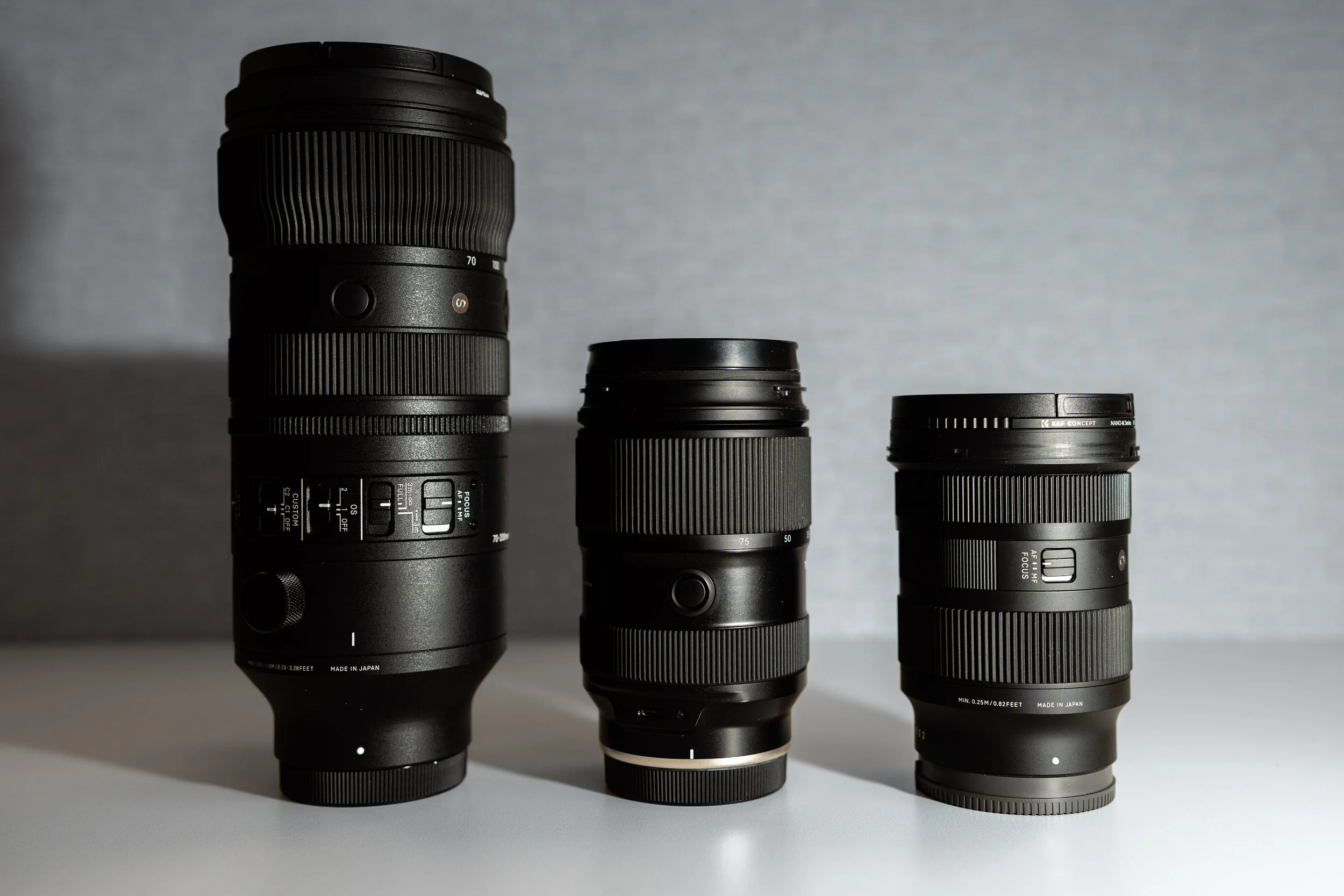
Sigma 70-200 f/2.8 / Tamron 28-75 f/2.8 / Sigma 16-28 f/2.8
Speaking of lenses, I think this is the perfect time to tell you about the lenses I own. But before I go through my collection, I’d like to explain my philosophy a little.
For me, a lens must, above all, meet my needs. I don’t need to over-equip myself. I need versatility, efficiency, and something that truly captures what I want to convey through my images. Of course, it needs to be high quality, and ideally have a fast enough aperture to allow me to shoot comfortably in as many situations as possible.
That’s also why I wanted to take a moment to share my thoughts on zoom lenses and prime lenses.
And to be very clear from the start: for me, this isn’t a debate worth having. It’s not a matter of “prime lenses are better” or “zoom lenses are terrible.” Everyone works differently; everyone has their own preferences. It’s not all black and white.
Still, there are a few facts that can’t be denied.
Zoom lenses are clearly excellent for work. Their speed and versatility—especially for events—make them a real asset. They save you from having to change lenses every two minutes, and they also let you work efficiently even if you don’t necessarily have two cameras.
I think having a good zoom lens with a constant aperture—typically f/2.8—is a very solid foundation. These days, there are even zoom lenses with an aperture as wide as f/2… By the way, Sony, if you’d like to give me one, I’m open to the idea.
When it comes to prime lenses, I’ll be completely honest: I love working with them. They’re not what I use the most, which is a bit of a shame.
When I switched from Fujifilm to Sony, I lost a little money, and I had to make some choices. I needed to cover as many situations as possible without breaking the bank, so I opted for zoom lenses.
But I’m slowly making my way back to prime lenses, especially with the Sigma 35 mm f/1.4 that I recently added to my collection.
For me, prime lenses allow for more creativity. The results are often more unique and striking. They’re more of a tool for enjoyment and emotion.
With a fixed focal length, you can’t zoom. And in a way, that’s great. Zoom lenses can sometimes make us a little lazy. With a fixed focal length, you’re forced to move around, find your frame, and compose differently.
You really have to work with the focal length you have, and I find that it helps a lot in improving as a photographer. It really does.
As for me, I don’t choose a lens based on its specs. For one thing, quite honestly, I don’t always understand everything in them (yes, I skipped quite a few optical physics classes in college). And mostly because that’s not what interests me the most.
I choose a lens for real-world use.
Wide-angle lens: Sigma 16–28 mm f/2.8
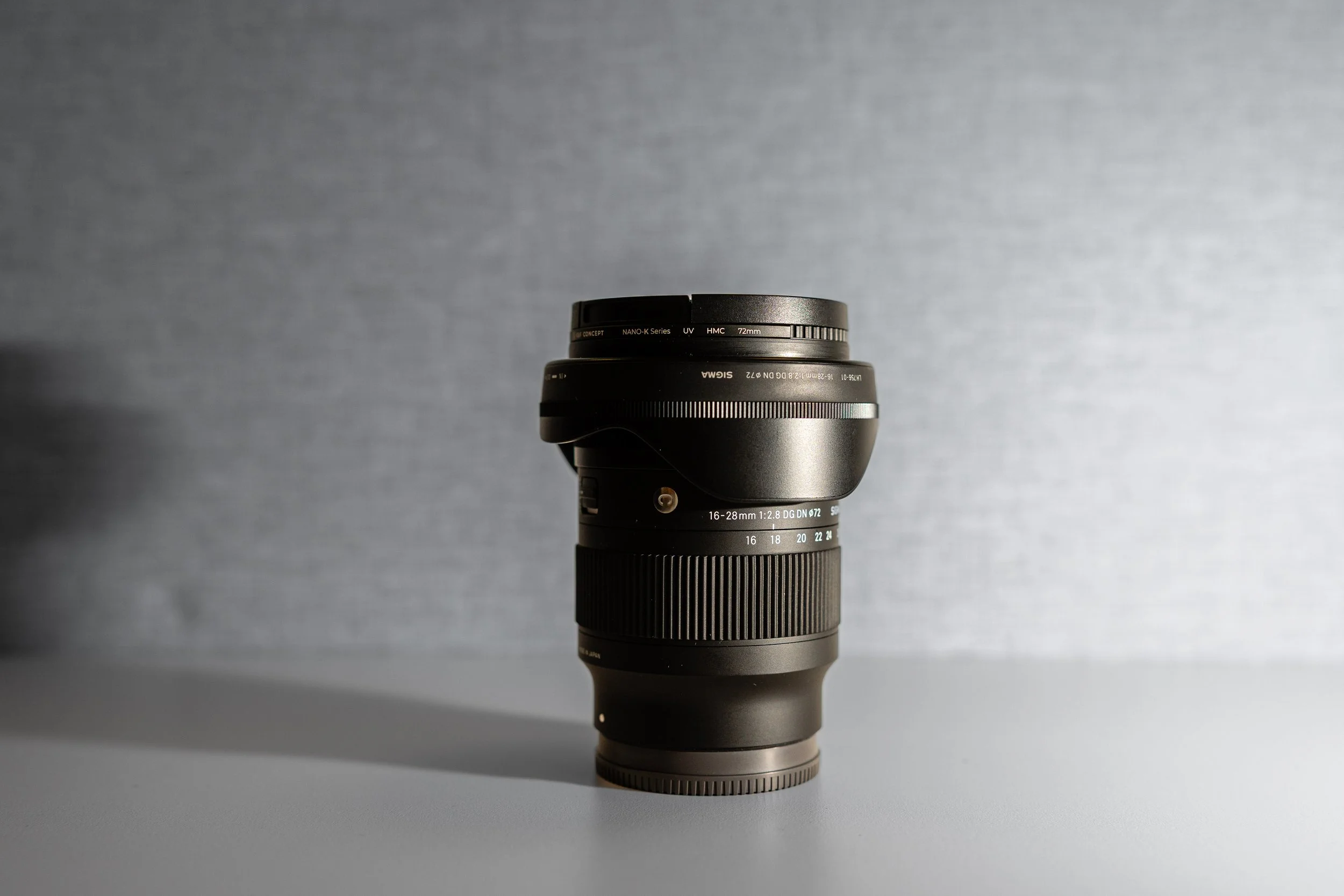
Let's start with the Sigma 16–28 mm f/2.8.
It's a wide-angle lens, and for me, it's first and foremost a tool for capturing context.
I use it mainly in real estate and architecture. Its purpose isn't to create gratuitous spectacle, but to showcase a space, give it breathing room, and place it in the right context.
In my photography, I very often use focal lengths between 16 and 20 mm. This range allows me to capture spaces—even small or confined ones—while maintaining control. I pay close attention to vertical lines and distortion, and I strive to keep my images clean and clear. At these focal lengths, the sharpness is excellent and the image rendering remains well-controlled.
I’m not going to go into a full technical specification—that’s not the point. But in practical terms, it’s a fairly lightweight, fairly compact lens with a constant maximum aperture of f/2.8. It doesn’t weigh me down, it fits easily in my bag, and for a fast wide-angle zoom, it offers excellent value for the money.
I got it for less than €900, and it weighs less than 450 grams. For a full-frame lens of this quality, it’s really a great compromise.
I use it for both photos and videos, indoors and outdoors. The images are very sharp, the colors are accurate, and it performs very well in low light. Distortion is minimal, and when it does occur, it’s easily corrected in post-production.
The autofocus is responsive and quiet, which is a big plus for video. It’s a lens I can rely on in the field.
That said, it also has its limitations.
It’s a lens that can quickly lead you to try to include too much in the frame. You might find yourself stuck at 16 mm, when sometimes all you need to do is switch to 20 mm or a bit more and take a few steps back to minimize distortion. It’s not an easy lens to master.
Whether used for travel photography or landscape photography, it can produce quite spectacular results very quickly. In real estate photography, however, it’s important to use it sparingly, under the right conditions, and to be aware of the risks of distortion or warping if you overuse it.
It’s also a great travel lens for landscape and architectural photography. It allows you to either create a more dramatic effect when you want to, or, conversely, capture images that are very true to life, with just a little adjustment in post-production.
In terms of use, this lens is suitable for both beginners in landscape photography and real estate professionals. It also works very well for video or wide-angle shots at events.
But this is definitely not the lens I use the most.
It’s a lens I pull out when I need it, not out of habit. And of course, I avoid using it entirely for portraits. That’s simply not what it’s designed for.
The centerpiece of the bag: Tamron 28–75 mm f/2.8 G2
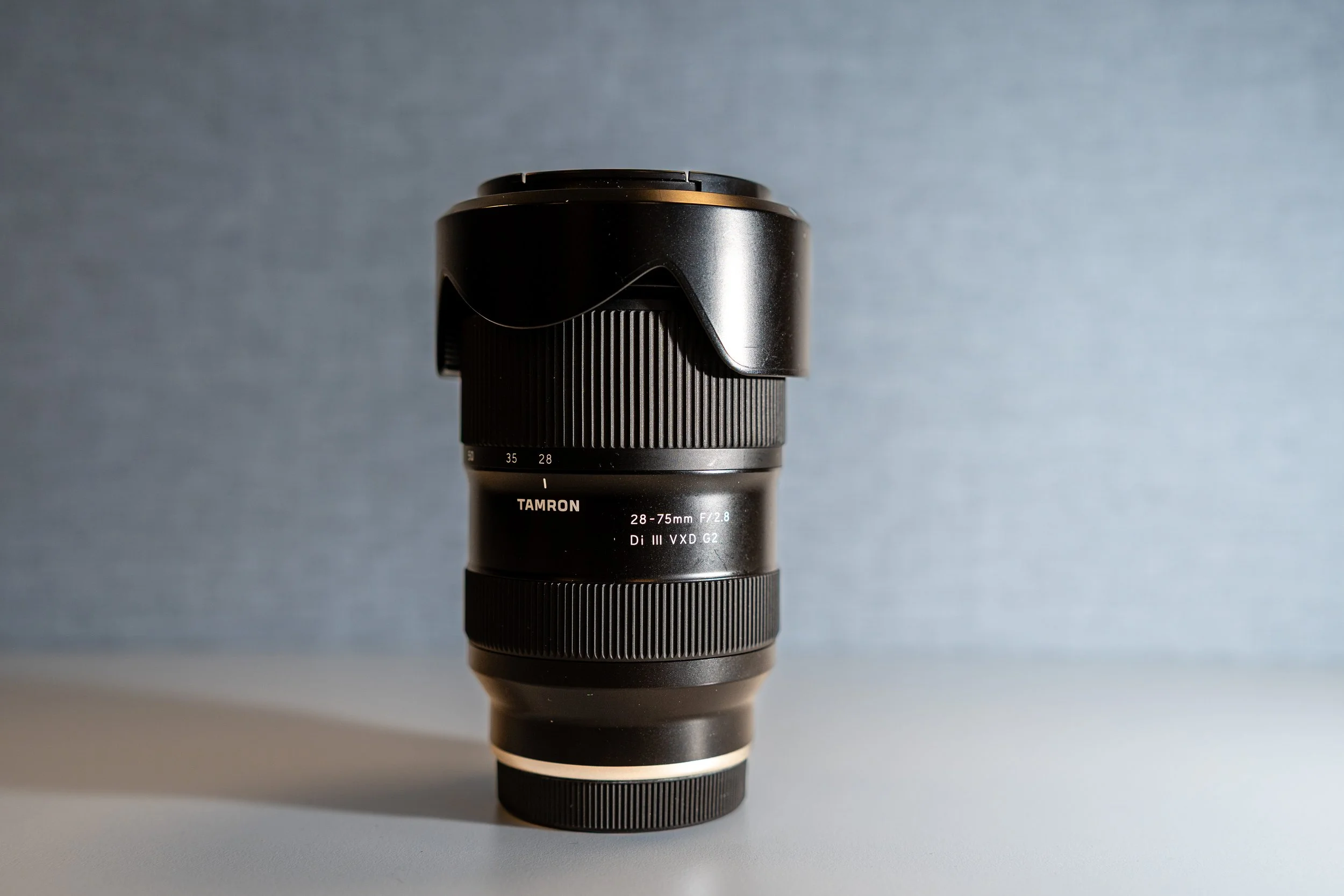
When I mount the Tamron 28–75, the idea is simple: to cover as many situations as possible.
It’s definitely the lens I reach for by default when I don’t know exactly how a gig will unfold or what conditions I’ll be shooting in. If I had to go out with just one lens, it would very often be this one.
If I had to sum it up in one sentence, I’d say that the Tamron offers a very versatile focal range, a sufficiently fast aperture, and value for money that’s hard to beat today. It’s a standard zoom lens that does its job very well: the autofocus is reliable and quiet, the sharpness is excellent, and it holds its own against higher-end lenses, especially when you consider the price.
This focal length range is ideal because it allows me to cover fairly wide scenes while still being excellent for portraits at 75 mm. I use it mainly for event photography and video, and honestly, it easily covers 80% of my work. It’s a lens I can reach for in almost any situation without a second thought.
The main reason I chose this Tamron over a Sigma or a Sony GM is very simple: value for the money. It’s compact, lightweight, weather-sealed, and perfectly suited to my needs. Of course, you can find slightly better options by moving up in the lineup, but they’ll be more expensive, bulkier, and not necessarily more practical in the field.
In the field, I actually use the 75mm focal length very often. For video, at 28mm it pairs very well with the A7 IV’s 4K 60p crop. It performs very well in low light. The autofocus never fails, and at full aperture, the sharpness remains solid. I’ve never had any unpleasant surprises with it.
In terms of image quality, I find it to be quite high-contrast, with accurate colors and very decent sharpness. It’s not the most “characterful” lens on the market, but it does exactly what you ask of it. Quite honestly, if you compare it to an equivalent Sony or Sigma lens, as long as you don’t zoom in to 200%, you’ll see almost no difference. And even at 200%, the difference remains minimal.
Does it have a distinct character? Not really.
It’s a lens that knows how to stay in the background. It doesn’t have the personality of a prime lens, but it’s incredibly effective. And above all, I enjoy working with it. It gives me beautiful colors, nice contrasts, and good sharpness—all for a very reasonable weight and price.
In terms of build quality, it falls a bit short of a high-end Sigma or Sony lens. You can’t have it all at that price point. It doesn’t frustrate me, but it’s true that compared to the Sigma 70–200 or the 35mm f/1.4, it feels more like a “tool” than a “beautiful object.” On the other hand, it’ll handle 90% of the job with ease.
I would recommend it without hesitation to anyone looking for a versatile, high-performance lens without wanting to carry around unnecessary bulk.
For a Sony A7 III, an A7 IV, or more generally a mid-range setup, it won’t make any difference in your photos. And if I had to start from scratch today, I’d buy it again without hesitation.
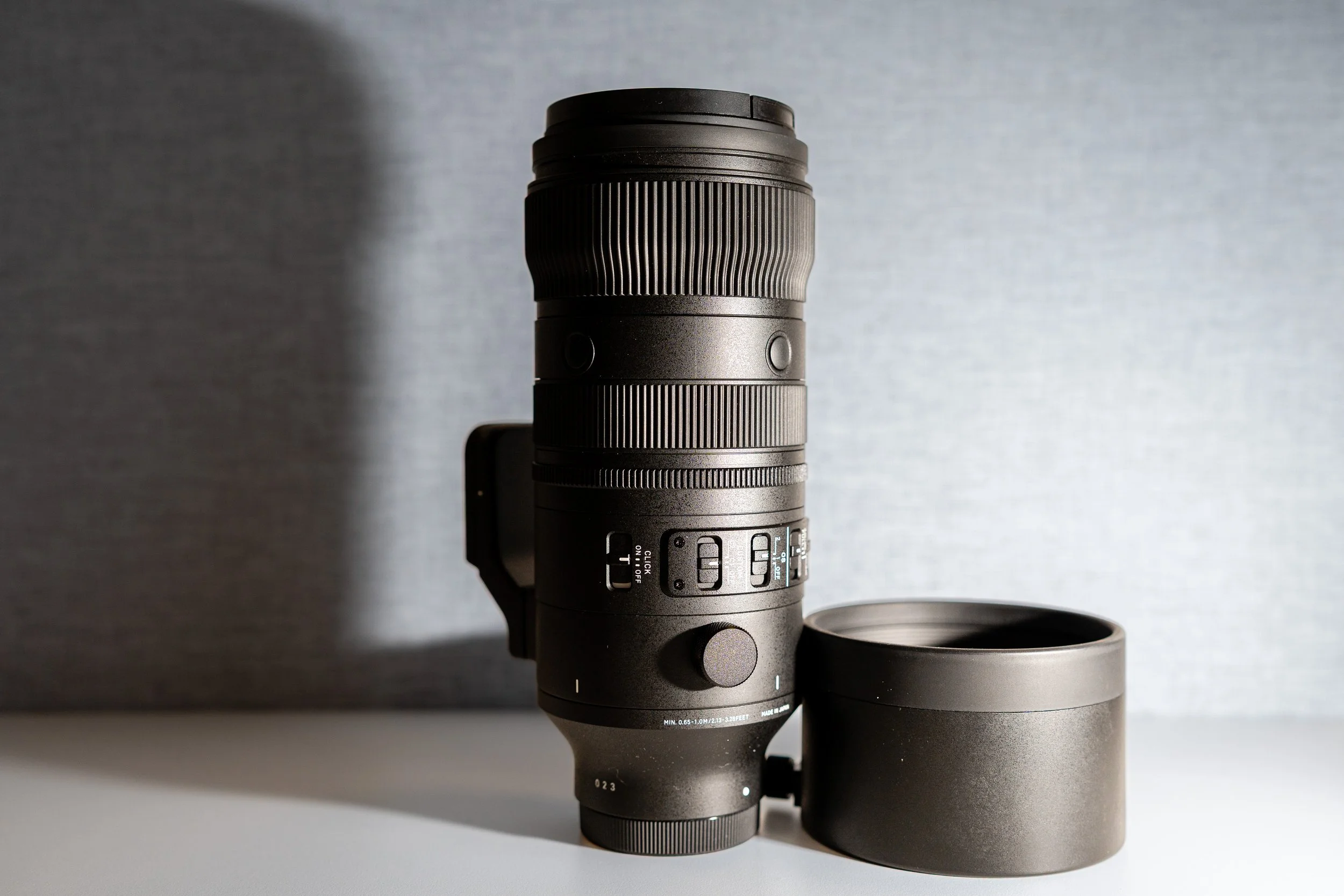
The Long-Focus Lens: Sigma 70–200 mm f/2.8
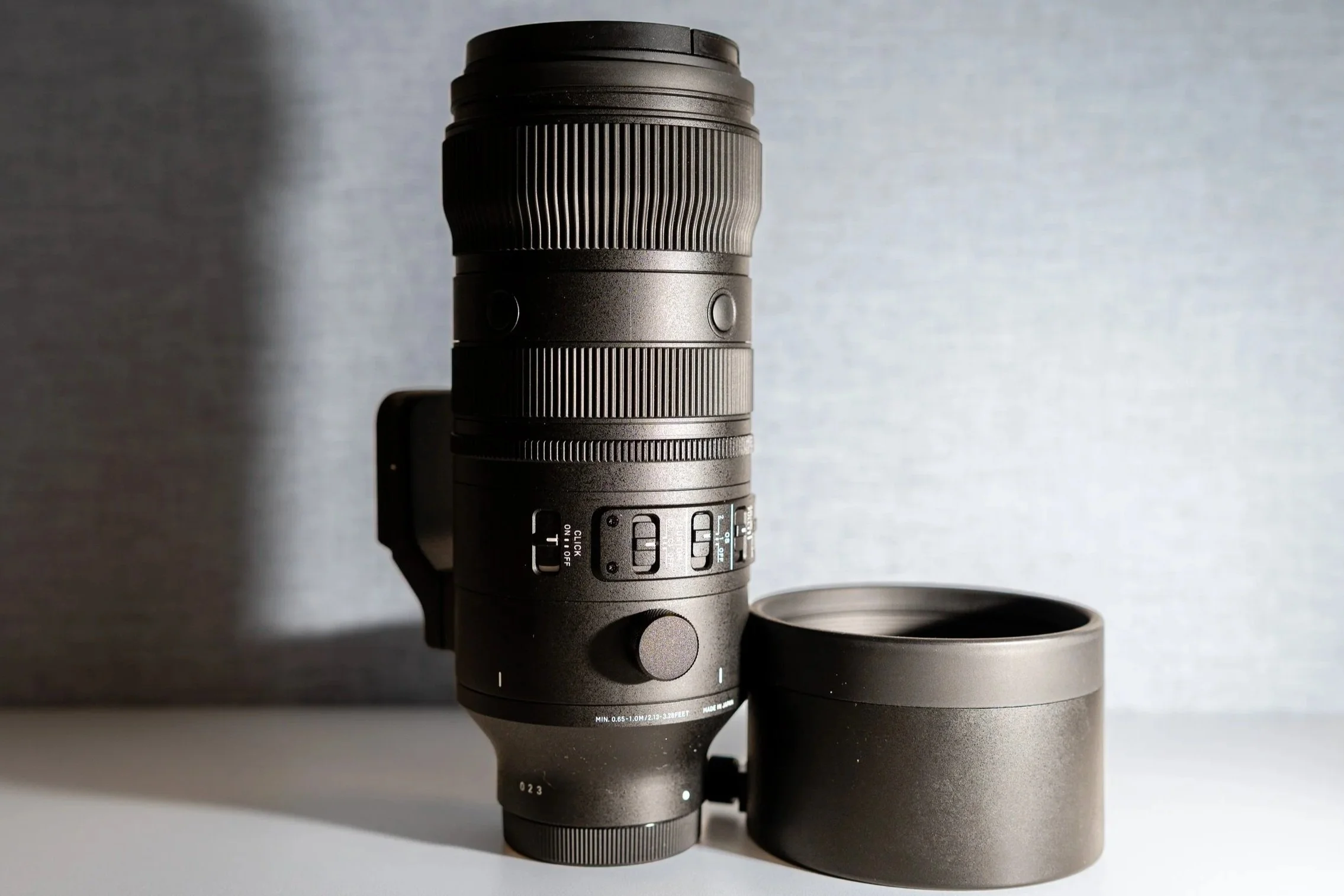
Sigma 70-200 f/2.8
The 70–200 is in a league of its own.
It’s kind of the Holy Grail of telephoto lenses. Not the lightest, not the most discreet, but clearly one of the most powerful when it comes to telling a story through an image in a different way (or just to show off—have you seen this beast?).
I use it when I need to isolate or condense a scene, or when I’m working remotely. While a wide-angle lens provides context, the 70–200 lets me make choices—to show only part of the scene. And often, that’s when the image becomes more powerful.
In portrait photography, the compression is simply magnificent. It flattens the foreground, softens the background, and naturally highlights the subject. The result is flattering and elegant, without ever feeling forced. It’s a lens that instills confidence in both the photographer and the subject.
At weddings, I also use it a lot for one simple reason: to give couples some privacy. Being able to stay at a distance allows me to capture genuine moments without intruding or interrupting what’s happening. The idea is never to be a voyeur, but rather to respect the moment while accurately capturing it.
Contrary to what one might think, the 70–200 is also great for landscape photography. Here, too, it all comes down to compression. It allows you to isolate a line, a mountain, or a light source—and sometimes transform a rather ordinary landscape into something much more visually striking. The goal isn’t to show everything, but to simplify.
The Sigma 70–200 mm f/2.8 that I use is clearly a high-end lens. The build quality inspires confidence, the sharpness is excellent, the colors are accurate, and the autofocus is fast and precise. At f/2.8, the subject stands out very cleanly, with a smooth and pleasing bokeh.
Obviously, this isn’t a lens I take out all the time. Its weight and bulk mean you have to have a specific purpose in mind. It’s not a “go-to” lens. But when I mount it, I know exactly why.
It’s not the lens I use most often in my bag, but it’s clearly one of the most valuable.
Flash: Godox V1 Pro S
The flash is a tool that many photographers are afraid of when they're just starting out. And I was definitely one of them.
If used incorrectly, its flaws are glaringly obvious. If the exposure is off, it overpowers the ambient light and makes the entire context of the scene disappear. But when used correctly, it can actually help you create some truly beautiful images.
As for me, I use the Godox V1 Pro S.
Simple, powerful, reliable. It doesn't replace the existing light—it complements it. And that's exactly what I need it to do.
The round head offers a real advantage. The light is softer, more even, and less harsh than with a conventional flash. Indoors, at a wedding or other event, it provides clean lighting without that harsh, direct flash effect. The result is natural and unobtrusive.
The way I use it, I almost always bounce it off a wall or the ceiling. The goal is never to overwhelm the scene, but to add depth, bring out the shadows, and balance out difficult lighting. I realized pretty quickly that this flash could literally save a shot.
In terms of ergonomics, the Godox V1 is very well designed. Everything is simple, intuitive, fast, and reliable.
I shoot in TTL mode about 70% of the time, making personal adjustments depending on the scene. At events, this saves me a tremendous amount of time. I focus on what’s happening in front of me, not on my settings. And with this flash, I have almost blind confidence in it.
I don't use it every day. Above all, I'm a lover of natural light. But when the light is bad, nonexistent, or too difficult to manage, the V1 becomes a real safety net.
Another big advantage: the Godox ecosystem.
If I need to off-camera flash or work with multiple light sources, everything I need is already there. Nothing gets in the way, everything works together, and that gives me a lot of freedom.
As with all my equipment, I prioritize ergonomics and efficiency above all else. And in that regard, the Godox V1 Pro S does the job perfectly.
If there's one real downside to this flash, it's that there's always going to be some smart aleck who asks you why you have a lamp attached to your camera. It's inevitable.
Continuous Light: K&F Concept PL 60B 60W
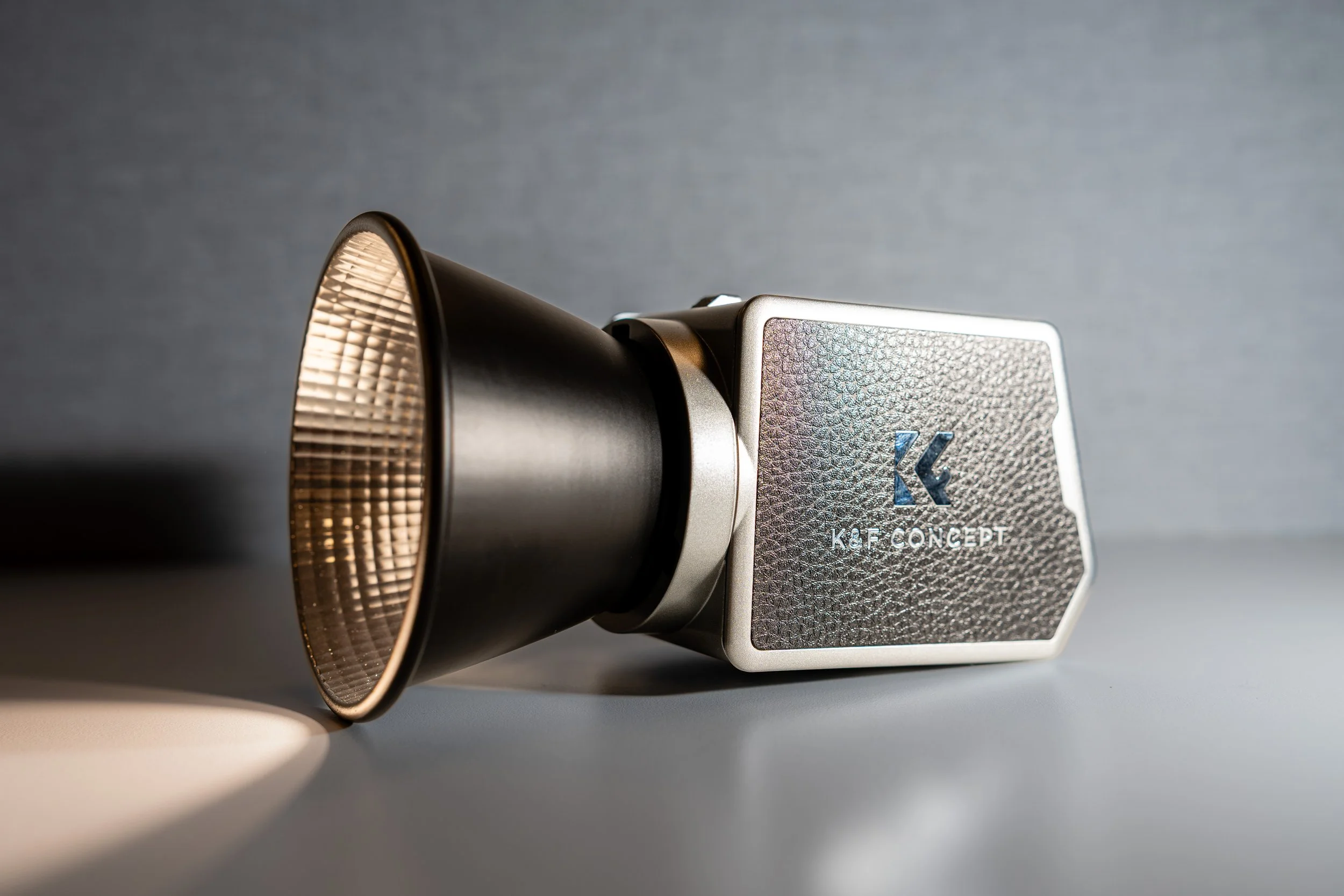
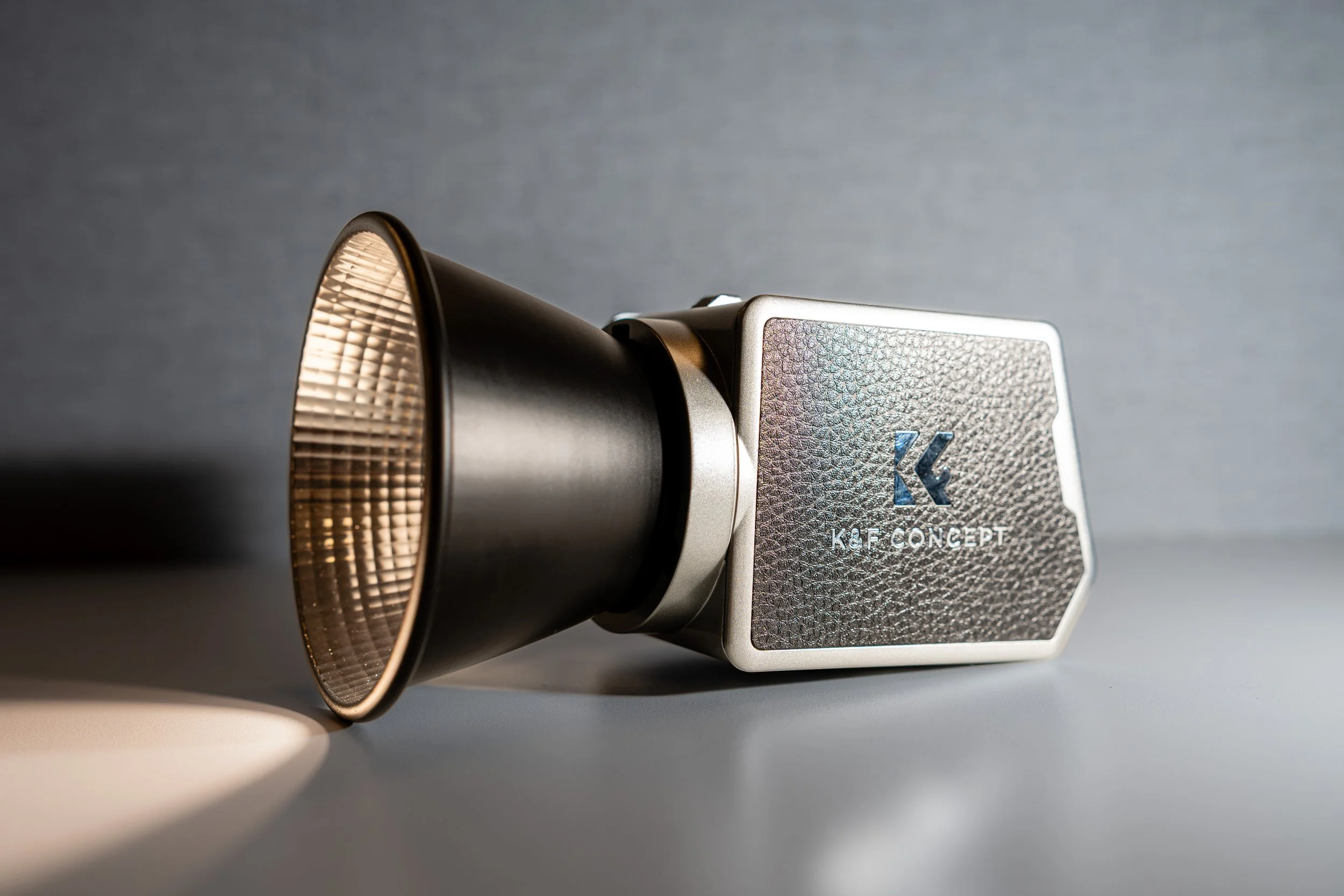
I use continuous light very selectively. Mainly in video, corporate projects, or when I need simple lighting to create a clean, controlled atmosphere. And for that, I use a K&F Concept 60W.
Its biggest advantage is its simplicity. You turn it on, see what you’re doing, and adjust it. No calculations, no surprises. For interviews, video portraits, or close-ups, it’s more than enough. With a diffuser, you get soft, pleasant light.
This little lamp has a built-in battery and a fan. Without running it at full power, it lasts about 45 minutes.
(I’m a total worrier, so I often plug it into an outlet. Be wary of batteries.)
But let’s not forget: 60W is still 60W.
It’s not a light that will rival the sun, nor will it illuminate a large room in broad daylight. If you’re hoping to turn your living room into a movie set, you’re likely to be disappointed. It gets the job done, and that’s all.
Another thing to keep in mind: it’s not the most flattering light right out of the box. Without diffusion, the lighting can quickly become a bit harsh. But when used properly and positioned correctly, it becomes perfectly usable.
Actually, it’s a fill light. A backup light. The one I pull out when I need a quick, lightweight, portable setup and don’t feel like spending an hour setting anything up. (You’re going to end up thinking I’m a total slacker (and yes, I am)).
The gimbal: DJI RS 4 Mini (and AI tracking)
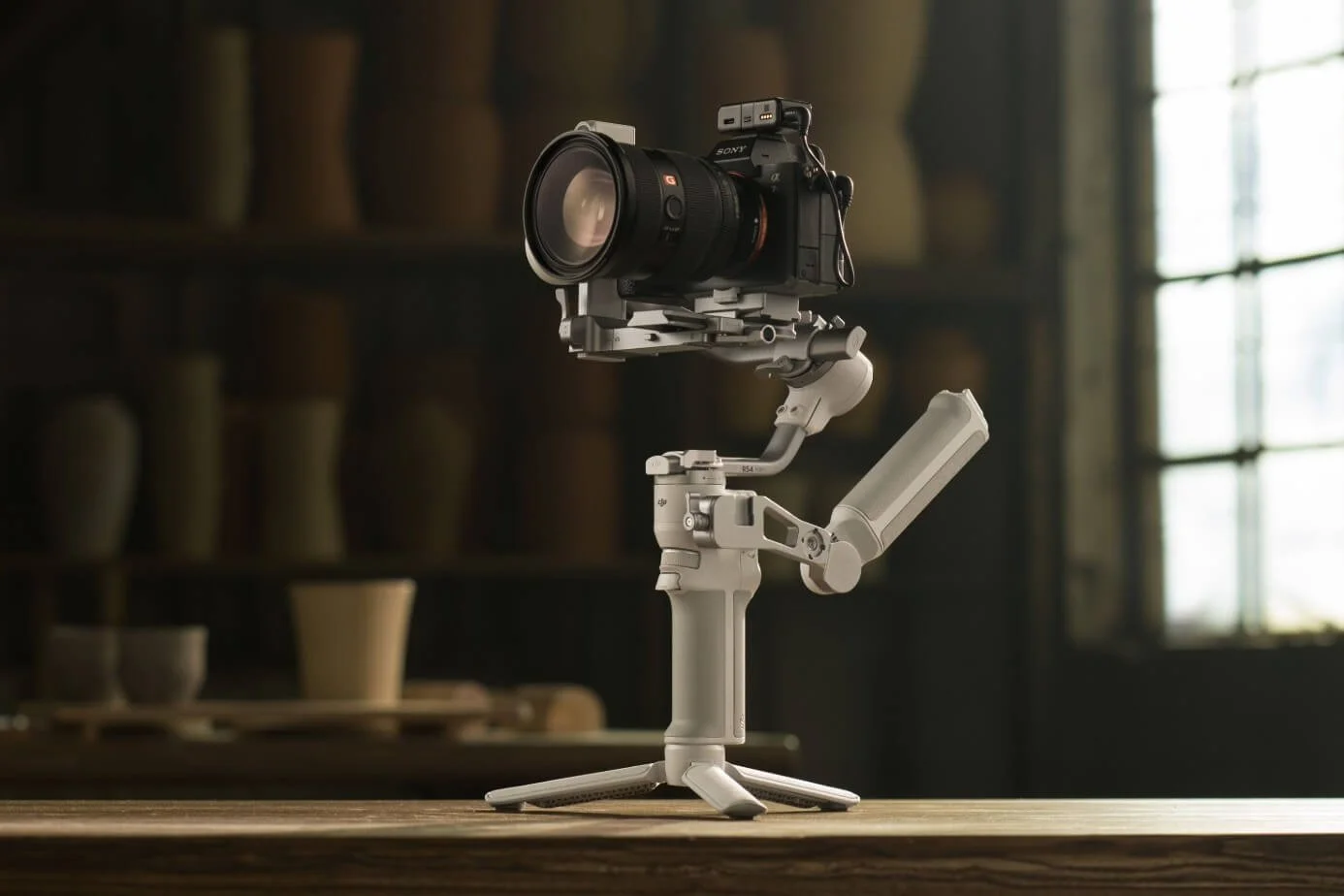
In video, stabilization can really make a difference.
Of course, it all depends on the context, the artistic vision, and what you're trying to show.
When I talk about stabilization, I’m not necessarily referring to ultra-smooth shots at any cost. I’m mainly talking about a clear image that’s pleasant to watch.
For that, I use the DJI RS 4 Mini.
It’s compact, lightweight, but powerful enough. I don’t need a huge, heavy gimbal. I need something I can easily pull out, carry around without thinking about it, and use without struggling with it. As is often the case, the best gear is the gear you actually use, not the gear that’s gathering dust at home.
I've found the right balance with the RS 4 Mini. It's more than powerful enough for my setup, the battery life is good, and—most importantly—it's still a pleasure to use, even on longer shoots. The weight and ergonomics really make a difference.
I also picked up the AI tracking module.
On paper, it seems a bit like a gimmick—a small, unassuming plastic box. But in practice, it’s incredibly effective. Whether for interviews, corporate shoots, or simply tracking people, it lets you keep your subject firmly in frame without having to worry about a million details. And that’s a huge time-saver.
Well, it doesn't do the work for me (too bad), but it definitely makes it easier for me.
I don't shoot everything with a gimbal. I only use it when I have a specific goal in mind: a smooth movement, a sense of flow in the shot, something more cinematic.
A quick tip: Before you try to shoot some great shots, have some fun balancing your gimbal first. Otherwise, you're screwed.